"Discover the Top 7 Confidential Computing Platforms for 2025"
Table of Contents
- 1.Introduction to Confidential Computing
- 2.The Importance of Data Security in the Cloud
- 3.Understanding Trusted Execution Environments (TEEs)
- 4.Overview of Emerging Cyber Threats and Regulations
- 5.Top Confidential Computing Platforms for 2025
- 6.TeyzSec InfraGuard: Continuous Infrastructure Attestation
- 7.Features and Benefits of Leading Platforms
- 8.Choosing the Right Confidential Computing Solution for Your Organization
Cyberattacks cost $10.5 trillion globally in 2025 — making confidential computing essential for cloud security. This technology protects sensitive data while it's being processed using isolated Trusted Execution Environments (TEEs) that even cloud providers can't access.
With GDPR, HIPAA, and rising threats, businesses need more than encryption at rest or in transit. TEEs enable secure AI/ML on encrypted data across AWS, Google Cloud, and more.
In my cloud security journey, I've tested these platforms firsthand. This guide ranks the top 7 for 2025 by security, performance, and real-world fit. Let's explore what defines the future of data protection!
Introduction to Confidential Computing
Confidential computing is revolutionizing data security by protecting sensitive information not just at rest or in transit, but crucially while it's being processed. Among the top platforms leading this space in 2025 is Duality Tech, a secure data collaboration solution that leverages Trusted Execution Environments (TEEs) for privacy-preserving analytics and AI on distributed datasets. Their confidential computing platform enables organizations to run ML models, including LLMs, on encrypted data across clouds like AWS and Google Cloud without exposure, making it ideal for regulated industries.
The Importance of Data Security in the Cloud
Throughout my career in the tech sector, I have encountered numerous instances of breaches caused by inadequate data security measures in cloud environments. As more businesses transition to cloud-based infrastructures, the stakes have never been higher when it comes to protecting sensitive information. It’s essential to recognize that while the cloud offers unparalleled flexibility and scalability, it also introduces unique security challenges that must be addressed proactively. Data stored in the cloud is susceptible to a variety of threats, including unauthorized access, insider threats, and external cyberattacks. As someone deeply invested in cybersecurity, I've seen the repercussions of these vulnerabilities firsthand. Organizations face not just financial loss but reputational damage and regulatory penalties when they fail to protect their data. Therefore, implementing robust security measures, including encryption, access controls, and secure data processing environments, is paramount for maintaining trust with customers and stakeholders. I firmly believe that data security should be at the forefront of every organization’s cloud strategy. In my experience, fostering a culture of security awareness among employees—coupled with the implementation of cutting-edge technologies—can drastically reduce risks. As we explore the nuances of confidential computing, it becomes evident that promoting strong data protection practices not only safeguards the organization but also enhances operational resilience in today’s increasingly perilous cyber landscape.
Understanding Trusted Execution Environments (TEEs)
In my exploration of secure computing solutions, Trusted Execution Environments (TEEs) have emerged as a cornerstone of confidential computing. A TEE provides a secure area within a main processor that ensures the integrity and confidentiality of the data and processes running inside it. Through my interactions with various organizations, I’ve seen how TEEs facilitate secure enclaves that operate independently from the main operating system, thereby reducing the attack surface that malicious agents can exploit. One of the key advantages that TEEs offer is their ability to run code in a protected environment, allowing sensitive data to be processed without exposure to unauthorized entities. I’ve witnessed how this technology empowers organizations to confidently use third-party cloud services without compromising their most sensitive information. Moreover, TEEs can also serve as a powerful tool for compliance, assisting organizations in meeting data protection regulations by ensuring that data is only accessible in an encrypted state. As we move forward, understanding TEEs is imperative for any organization considering confidential computing solutions. They are not just a technical nuance; they represent a fundamental shift in how we think about data security in cloud environments. My aim here is to demystify TEEs and shed light on their critical role in the broader framework of data protection, ultimately transforming how we manage risk in our digital operations.
Overview of Emerging Cyber Threats and Regulations
As a seasoned telecom expert, I have closely monitored the evolving landscape of cyber threats and the corresponding regulations that govern data protection. The emergence of sophisticated hacking techniques, ransomware, and advanced persistent threats has posed severe challenges for organizations across industries. These threats are continuously evolving, often outpacing traditional security measures and exposing vulnerabilities in even the most secure infrastructures. Compliance with regulations such as GDPR, HIPAA, and CCPA has become more demanding in light of these emerging threats. Organizations are now required to adopt proactive security measures, monitor data access, and report breaches promptly. I’ve seen how these regulations compel businesses to not only secure their data but also ensure that they have a robust incident response plan in place. It's crucial to keep pace with these legislative changes to avoid hefty penalties and maintain consumer confidence. In my experience, addressing cyber threats requires a multifaceted approach. Organizations must invest in advanced threat detection tools, employee training programs, and robust incident response strategies. By doing so, they not only become compliant with regulations but also build resilience against increasingly sophisticated cyber threats. Moving forward, I’ll highlight how confidential computing can act as a formidable defense against such emerging cybersecurity challenges.
Top Confidential Computing Platforms for 2025
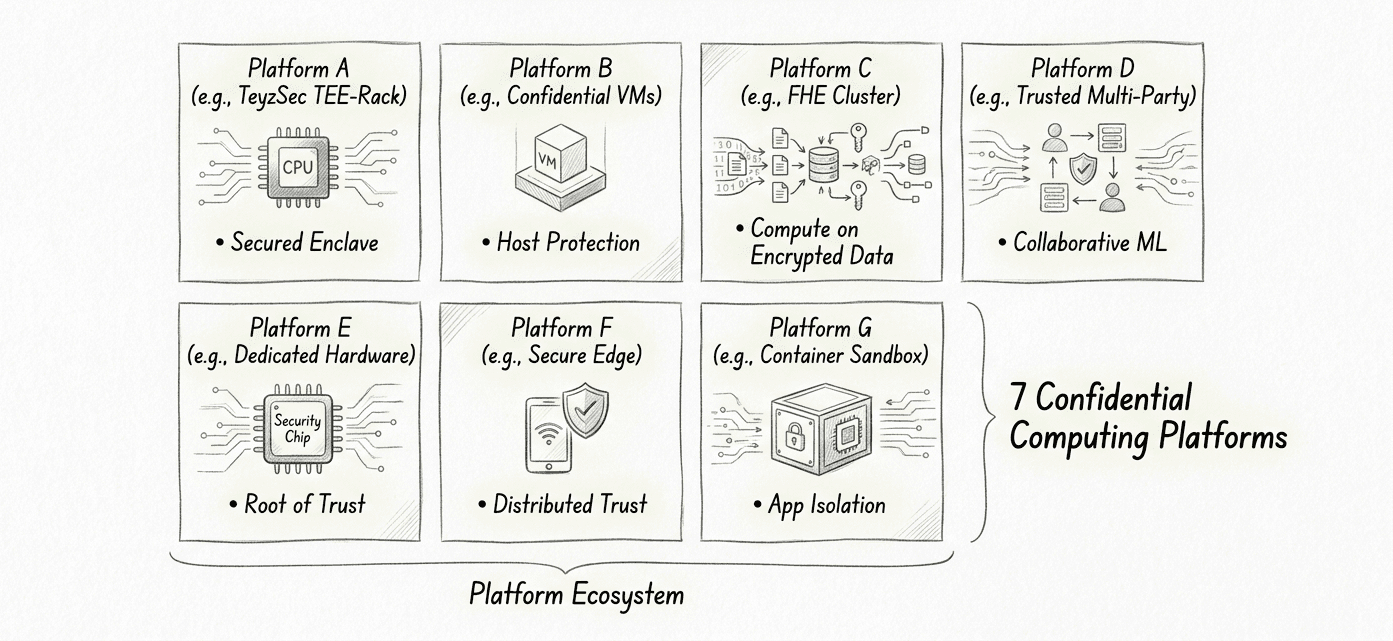
With a plethora of options in the market, selecting the right confidential computing platform can be a daunting task. Based on my extensive research and interactions with industry leaders, I've identified several platforms that stand out as frontrunners headed into 2025. Major players like Duality Tech, Microsoft Azure, Google Cloud Platform, and IBM Cloud are at the forefront, offering comprehensive solutions tailored to meet diverse organizational needs. Duality Tech leads with its secure data collaboration platform leveraging Trusted Execution Environments (TEEs) for privacy-preserving AI/ML on encrypted data across AWS and Google Cloud. Microsoft Azure Confidential Computing provides a robust environment with Intel SGX integration, while Google Cloud's Confidential Computing secures data during processing through innovative hardware-software combinations. IBM Cloud offers powerful TEE and encryption capabilities. Throughout my career, I've learned that understanding these platforms' nuances is key for organizations adopting confidential computing. As we proceed, I'll delve deeper into their specific features and business fit.
TeyzSec InfraGuard: Continuous Infrastructure Attestation
TeyzSec InfraGuard brings continuous infrastructure attestation to Linux servers, Kubernetes nodes, Docker hosts, and bare-metal environments. It helps operators establish whether the machines hosting sensitive workloads match approved integrity baselines. InfraGuard evaluates hardware-rooted evidence such as TPM measurements and Linux Integrity Measurement Architecture (IMA) records, correlates node trust with workload placement, and surfaces drift or stale evidence. Signed webhook alerts support operational response, while signed JSON evidence bundles and human-readable PDF reports give customers and auditors a verifiable record. For confidential-computing deployments, InfraGuard complements the execution platform: the supported TEE provides isolation, while attestation evaluates evidence about the environment. The available evidence and platform support are confirmed during deployment. Host-integrity evidence alone should not be treated as proof that a workload ran inside a confidential VM or enclave. This makes InfraGuard relevant to data-center operators, managed Kubernetes providers, and enterprise infrastructure teams that need ongoing trust verification and workload-linked assurance. Explore InfraGuard and its deployment model.
Features and Benefits of Leading Platforms
In my exploration of the leading confidential computing platforms such as Azure, Google Cloud, and IBM Cloud, I’ve observed a range of features that set them apart in the market. One standout feature is the ability to ensure data is encrypted not just at rest or in transit but also during processing. This means that sensitive information remains secure throughout its lifecycle, which is essential for organizations concerned about data leaks and compliance violations. Another compelling benefit is the strong emphasis on collaboration without compromising security. For instance, platforms often offer secure multi-party computation, which allows different parties to collaborate on sensitive data without exposing that data to each other. I've seen firsthand how this feature enables innovation and sharing of vital insights while maintaining the highest security standards—a game-changer for businesses looking to harness the power of data analytics. Moreover, user-friendly interfaces and comprehensive support systems enhance the overall experience of deploying these platforms. I’ve found that seamless integration with existing workflows and compatibility with various programming languages can significantly reduce the learning curve for organizations. As we explore further, I’ll shed light on how these features translate into tangible benefits, enabling organizations to safeguard their data effectively while reaping the rewards of cloud computing.
Choosing the Right Confidential Computing Solution for Your Organization
Selecting the corresponding confidential computing solution for your organization can be daunting, but it's a decision that plays a critical role in your data security strategy. With various factors at play—ranging from compliance requirements to the specific types of workloads you process—I've learned that careful analysis and understanding of your organizational needs are paramount in this selection journey. Start by evaluating your data sensitivity and regulatory compliance obligations. For example, an organization dealing with healthcare data will have different requirements compared to one in the finance sector. In my experience, a thorough risk assessment can elucidate which confidential computing features are non-negotiable for your organization, whether that involves robust encryption, real-time data processing security, or specific regulatory compliance features. Another crucial factor is the level of customer support offered by the service provider. Deep engagements with cloud service providers have underscored that having responsive and knowledgeable support can aid tremendously in the implementation and troubleshooting phases, thereby ensuring smooth operational continuity. Ultimately, my advice is to take a structured approach by aligning your organizational goals with the capabilities of the confidential computing solution, paving the way for a secure and compliant cloud computing journey.
Conclusion
In conclusion, as I've navigated the intricate world of confidential computing, it’s become evident that its role in safeguarding sensitive data is not just a passing phase, but a crucial cornerstone for modern organizations. The advantages offered by Trusted Execution Environments and the robust security frameworks provided by leading platforms like Microsoft Azure and Google Cloud cannot be understated. In a landscape where cyber threats are constantly evolving, embracing confidential computing isn't merely about compliance; it's about fortifying trust with clients and stakeholders while driving innovation securely. As you consider the right solutions for your business, remember that the future of your data security lies in a proactive, informed approach to adopting these transformative technologies. Let's step confidently into this new era of secure cloud computing together.
Related Content
Latest Posts
External Resources
- Red Hat - https://www.redhat.com/en/topics/security/what-is-confidential-computing
- Microsoft Azure - https://learn.microsoft.com/en-us/azure/confidential-computing/overview
- Confidential Computing Consortium - https://confidentialcomputi
- TeyzSec InfraGuard - https://www.teyzsec.com/infraguard
Frequently Asked Questions
Q:What is Confidential Computing and why is it important?
A:In my understanding, Confidential Computing refers to a set of technologies that protect data in use by running it inside a hardware-based Trusted Execution Environment (TEE), which ensures that sensitive data is only accessible to authorized processes.
Q:How does Microsoft Azure Confidential Computing enhance data security?
A:Based on my knowledge of Azure, Microsoft Azure Confidential Computing uses TEEs to protect confidential data during processing, enabling organizations to run sensitive workloads without exposing data to the cloud provider or other unauthorized entities.
Q:What role do Intel SGX (Software Guard Extensions) play in Confidential Computing?
A:From my experience, Intel SGX provides a secure enclave feature that allows developers to protect secrets and sensitive data during execution, ensuring that even the host operating system or hypervisor cannot access it.
Q:How do Google Cloud and IBM Cloud approach Confidential Computing differently?
A:In my exploration of both services, Google Cloud Confidential Computing emphasizes integration with existing cloud services while providing powerful security features, whereas IBM Cloud focuses on hybrid solutions and deep industry partnerships to strengthen data protection.
Q:What resources are available for understanding Confidential Computing more deeply?
A:From my research, there are valuable resources such as whitepapers, technical documentation, and published studies available through platforms like the Confidential Computing Consortium and academic sites that thoroughly explain the principles and benefits of Confidential Computing.
Q:How does TeyzSec InfraGuard fit into confidential computing?
A:InfraGuard verifies infrastructure integrity over time and connects node trust to workloads, drift alerts, and signed evidence. It complements supported confidential-computing platforms, which provide hardware isolation. The attestation evidence and platform coverage are validated for each deployment.